Introduction: The Manufacturing Giant Awakens
China, long known as the "world's factory," is undergoing a dramatic transformation. In the bustling tech hub of Shenzhen, a new revolution is taking place—one powered by artificial intelligence, robotics, and advanced automation. This isn't just about making things cheaper; it's about making them smarter.
As labor costs rise and global competition intensifies, Chinese manufacturers are turning to AI to maintain their competitive edge. The results are nothing short of remarkable, with smart factories achieving productivity gains of 30-50% while reducing defects by up to 90%.
Shenzhen: The Silicon Valley of Hardware
Shenzhen has evolved from a small fishing village to a global technology powerhouse in just four decades. Today, it's home to tech giants like Huawei, Tencent, and DJI, and serves as the epicenter of China's AI manufacturing revolution.
- Hardware Ecosystem: Unmatched supply chain density with component suppliers within a 50km radius
- Government Support: $150 billion invested in AI development through 2030
- Talent Pool: Over 50,000 AI researchers and engineers in the Pearl River Delta
- 5G Infrastructure: First city in the world with complete 5G coverage enabling real-time AI processing
Key Technologies Driving Change
1. Computer Vision Quality Control
Traditional quality inspection relied on human workers checking products one by one—a slow, error-prone process. AI-powered computer vision systems can now inspect thousands of products per minute with 99.9% accuracy.
Foxconn, Apple's primary manufacturer, has deployed over 10,000 AI vision systems across its Chinese facilities. These systems detect microscopic defects invisible to the human eye, from circuit board soldering issues to cosmetic imperfections in smartphone casings.
2. Predictive Maintenance
Machine learning algorithms analyze sensor data from manufacturing equipment to predict failures before they occur. This proactive approach has reduced unplanned downtime by 45% in leading Chinese factories.
By analyzing vibration patterns, temperature fluctuations, and acoustic signatures, AI systems can detect bearing wear, motor degradation, or lubrication issues weeks before catastrophic failure.
3. Autonomous Mobile Robots (AMRs)
Unlike traditional AGVs (Automated Guided Vehicles) that follow fixed paths, AI-powered AMRs navigate dynamically through factory floors. Companies like Geek+ and Quicktron have deployed over 100,000 AMRs in Chinese warehouses and factories.
These robots use SLAM (Simultaneous Localization and Mapping) algorithms and deep learning to optimize material flow in real-time, adapting to changing production demands without human intervention.
Case Study: The Lights-Out Factory
Xiaomi's smartphone factory in Beijing represents the pinnacle of AI manufacturing. The facility operates with minimal human intervention—earning it the name "lights-out factory" because it can run in complete darkness.
Key Metrics:
- Production capacity: 1,000 smartphones per minute
- Automation rate: 92% of all processes
- Defect rate: 0.01% (industry average: 1-2%)
- Energy efficiency: 40% reduction through AI-optimized systems
Impact on Global Supply Chains
China's AI manufacturing revolution is reshaping global supply chains in profound ways:
Reshoring Pressure: As Chinese factories become more automated, the labor cost advantage diminishes. However, the AI infrastructure and ecosystem advantages keep production competitive, forcing other nations to accelerate their own automation efforts.
Supply Chain Resilience: AI-powered demand forecasting and inventory optimization have made Chinese supply chains more responsive to disruptions. During the pandemic, AI-enabled factories adapted 3x faster than traditional facilities.
Customization at Scale: AI enables mass customization—producing personalized products at mass production costs. Companies like Haier now offer customers the ability to customize refrigerator features, colors, and configurations, with AI systems reconfiguring production lines automatically.
Challenges and Considerations
Despite the impressive progress, several challenges remain:
- Workforce Transition: An estimated 100 million Chinese workers may need reskilling as automation accelerates
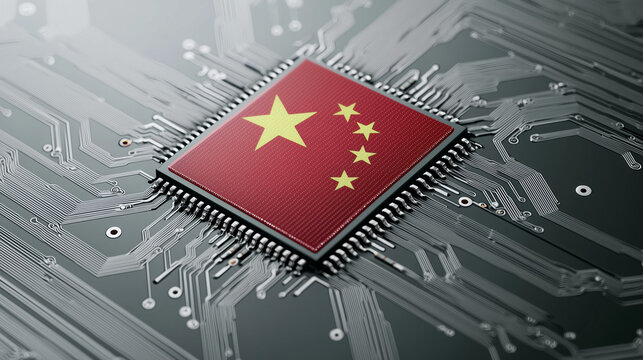
- Chip Dependency: Advanced AI requires cutting-edge semiconductors, creating vulnerability to trade restrictions
- Energy Consumption: AI data centers and robotics increase electricity demand, conflicting with carbon neutrality goals
- Data Privacy: Worker monitoring through AI raises ethical and privacy concerns
The Road Ahead: 2025 and Beyond
China's "Made in China 2025" initiative aims to transform the country into a global manufacturing superpower through AI and advanced technologies. Key focus areas include:
Digital Twins: Creating virtual replicas of entire factories to simulate and optimize production before physical implementation.
Edge AI: Processing data on-device rather than in the cloud, reducing latency to milliseconds for real-time decision-making.
Collaborative Robots (Cobots): AI-powered robots that work safely alongside humans, combining human creativity with machine precision.
Sustainable Manufacturing: AI optimizing energy consumption, material usage, and waste reduction to meet environmental targets.
Conclusion: A New Manufacturing Paradigm
China's AI-driven manufacturing transformation is not just about maintaining competitiveness—it's about redefining what's possible in production. Shenzhen's evolution from hardware assembly to AI innovation hub demonstrates how technology can revitalize traditional industries.
For businesses worldwide, the lesson is clear: AI in manufacturing is no longer a competitive advantage—it's a necessity. Companies that fail to embrace intelligent automation risk obsolescence in an increasingly competitive global market.
The robotics revolution is here, and it's being built in China. The question isn't whether AI will transform manufacturing—it's how quickly your organization can adapt.